Quick answer
How many seats on a private jet? Anywhere from four to about eighteen. Light jets take four to six, midsize jets six to eight, super-midsize jets eight to ten, heavy jets ten to sixteen and ultra-long-range jets twelve to eighteen; turboprops seat six to nine. Brochure maximums run higher, but charter layouts favour comfort, and a full cabin can limit baggage and range. Give the operator your real numbers.
Key takeaways
- Light jets seat four to six; ultra-long-range jets twelve to eighteen.
- Brochure maximums count seats you wouldn't want on a charter, so ask for the seats in the actual layout.
- An 8 seater is usually a midsize jet; for eight with luggage, a super-midsize is more comfortable.
- Seats, bags and fuel share the same weight limit, so a full cabin can reduce range.
- Pick the smallest class that fits your group and bags comfortably, then compare the per-person cost.
How many seats on a private jet? Anywhere from four to about eighteen, depending on the size of the aircraft. A light jet typically seats four to six, a midsize six to eight, a super-midsize eight to ten, a heavy jet ten to sixteen, and an ultra-long-range jet twelve to eighteen. Turboprops, which are propeller aircraft rather than jets, usually seat six to nine.
Those ranges are the useful answer, but they hide two things that matter when you book. The first is that a brochure's maximum seat count is rarely what you get on a charter. The second is that seats, bags and range compete with each other: a full cabin can mean less luggage space or a shorter flight. This guide covers private jet seating capacity by class, what "8 seater" and "10 seater" really mean, and how to pick the right size for your group and route. If you are new to chartering, our explainer on private jet charter flights covers how booking works before you choose an aircraft.
How many seats on a private jet, by class?
This is the reference table we use across the site. Seats and typical range match the figures in our fleet guide; baggage is a published figure for one example aircraft in each class, linked to its source, because hold sizes vary a lot between types.
Seats and range are typical planning figures for each class; individual aircraft vary with layout, load and conditions. Baggage figures are manufacturer or trade-press numbers for the named type, not class averages.
A few patterns stand out. Seat count roughly triples from the smallest jets to the largest, but range grows much faster, from around 1,500 nm to around 7,000 nm. And baggage space grows steadily with size, which matters more than most first-time flyers expect. On cost, each step up the table also steps up the hourly rate, which we cover in the private jet charter cost guide.
Maximum seats vs the seats you'll actually get
Manufacturers publish a maximum passenger figure, and it is almost always higher than the number a charter operator will sell you. The gap comes from how that maximum is reached.
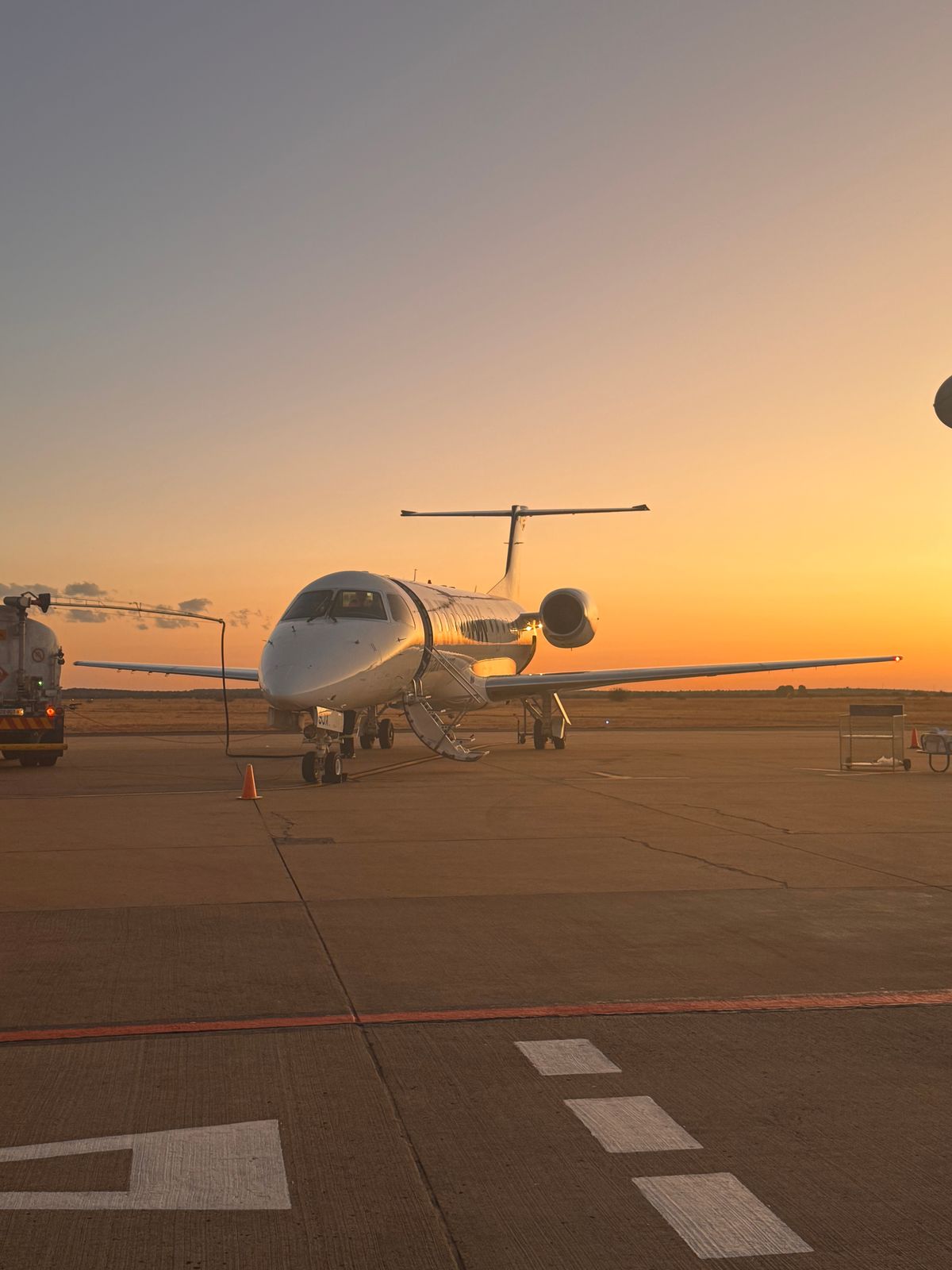
The Embraer Phenom 300E is a good example. Aviation Week's overview notes it can carry up to 10 passengers, but only with a single pilot, a two-place side divan, a belted lavatory seat and someone in the co-pilot's seat; with two pilots, the maximum drops to nine. A typical charter Phenom is flown by two pilots in a club layout, and you would not want a passenger on the lavatory for anything longer than a short hop. In practice, that is a comfortable four- to six-seat aircraft, which is exactly where our table puts light jets.
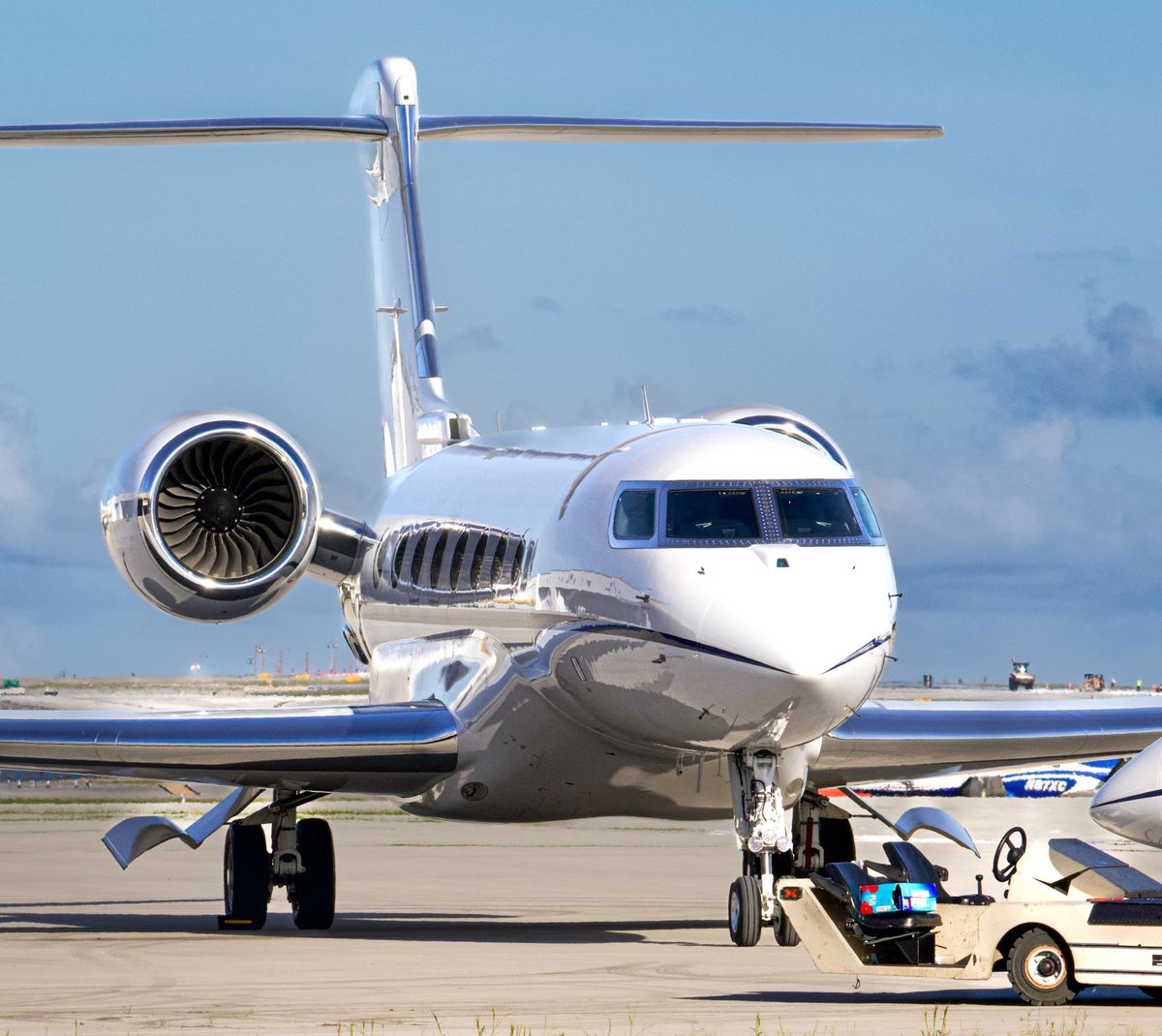
The same logic applies all the way up. Bombardier quotes the Global 7500 at up to 19 passengers, but many are fitted with private suites, dining areas and beds that cut the real number to the low or mid teens. When you compare aircraft, ask for the seats in the actual layout, not the type's certified maximum.
Seats, berths and the overnight question
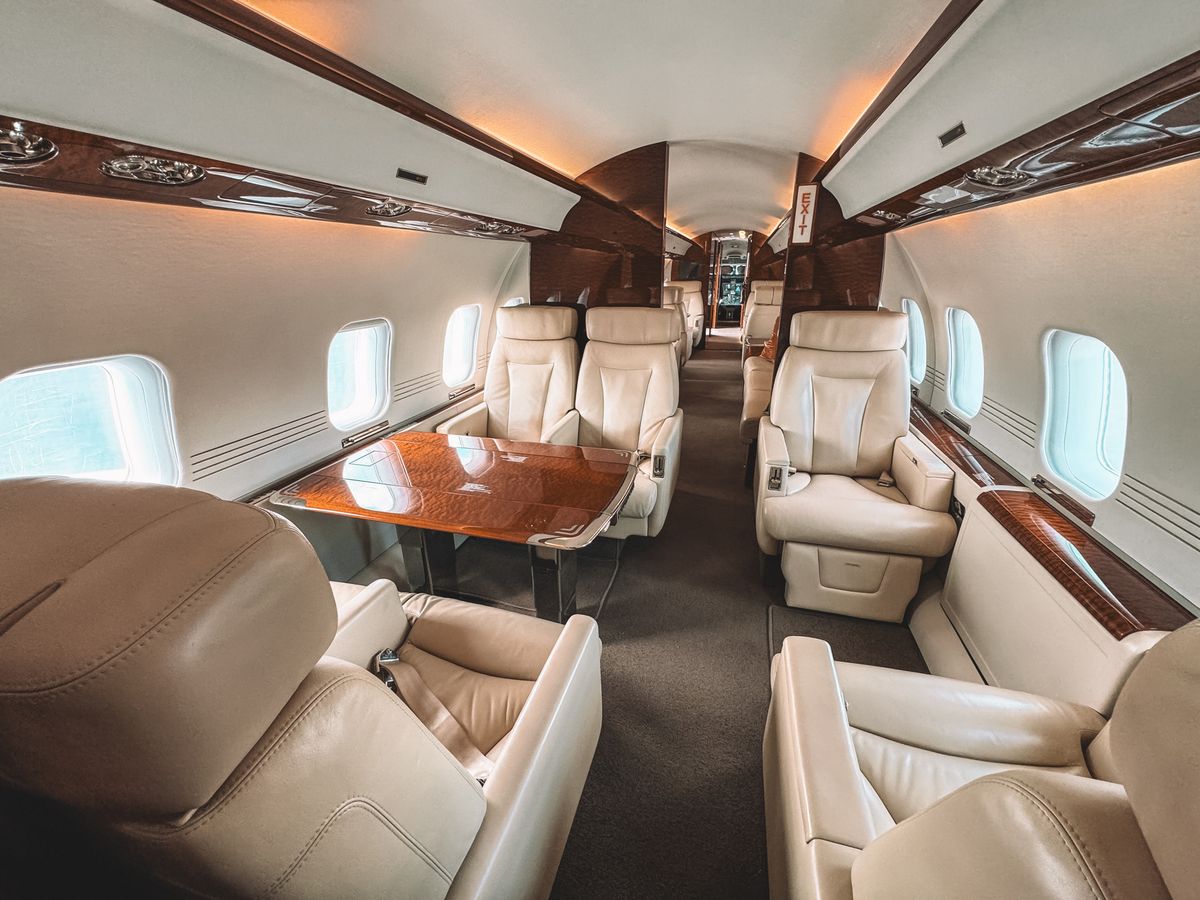
On long flights, the number of people who can lie flat matters as much as the number who can sit. Divans and seats that recline into beds turn a twelve-seat cabin into a cabin that sleeps perhaps half that number. If you are crossing an ocean overnight, ask how many berths the layout offers.
What changes as you move up a size?
Seats are only part of what you buy when you step up a class. The cabin itself changes, and for longer trips those differences matter as much as the seat count.
- Headroom. Light jets are compact: you sit comfortably but stoop to move around. From the midsize class upwards, and certainly by super-midsize, most cabins let most adults stand or nearly stand, which makes a three-hour flight feel very different.
- The washroom. Smaller jets may have a basic, compact lavatory, sometimes doubling as a seat. Larger cabins have a proper enclosed washroom, and the biggest jets may have more than one.
- Galley and catering. A light jet usually carries cold catering and drinks. Larger aircraft have a galley that can serve hot food, which matters on anything longer than a couple of hours.
- Cabin crew. On light and midsize jets, the pilots usually look after passengers themselves. Heavy and ultra-long-range jets are often flown with a dedicated cabin attendant, which is worth confirming when you ask for a quote.
- Zones. The largest cabins are split into separate areas for working, eating and sleeping, which is why their real seat count is often below the brochure figure.
None of this changes how safely the aircraft is flown. Every class operates under the same rules for commercial charter; size changes comfort, range and cost, not standards. If you are travelling with children or animals, our guide to flying private with pets covers what to ask about cabin space.
Cabin sizes compared: what the seat count feels like
Knowing how many seats on a private jet is half the picture; the other half is the space around them. Manufacturers publish cabin dimensions, and they show why a six-seat light jet and a ten-seat super-midsize feel like different kinds of travel even on the same route.
Manufacturer figures for each named type. Cabin length excludes the baggage compartment. Certified maximums include crew seats or belted extras on the smaller types, so the charter seat count is lower.
Two things stand out. Cabin height jumps between the light and midsize classes, which is why the midsize step is the one most groups notice. And cabin length more than doubles between a super-midsize and an ultra-long-range jet, while the certified seat count barely doubles: the extra space goes into separate living areas (Bombardier describes four on the Global 7500) rather than extra rows. On a long-haul aircraft you are buying room per person, not more people per aircraft.
What is an 8 seater private jet?
An 8 seater private jet usually means a midsize jet such as a Citation XLS or a Learjet 60, both in the six-to-eight-seat class. Eight people fit, but the cabin is full, and baggage becomes the limiting factor: the XLS Gen2 has 90 cubic feet of baggage space in total, which is comfortable for eight people with soft bags on a weekend trip and tight for eight people with large hard cases.
If you have eight people and a week's luggage, a super-midsize jet such as a Challenger 350 is usually the better fit. It seats eight to ten, so eight people have room to spread out, and it has a larger hold. It costs more per hour, but on a two-hour route the difference may be smaller than the cost of an uncomfortable trip. Our midsize jet charter cost guide covers what that class costs to hire.
What about a 10 seater private jet?
A 10 seater private jet sits at the top of the super-midsize class or the bottom of the heavy class. Bombardier quotes the Challenger 3500 at up to 10 passengers, so ten people in a super-midsize is possible, but every seat is taken. For ten people travelling with luggage, or on anything longer than a few hours, a heavy jet such as a Gulfstream G450 or a Falcon 2000LXS gives the group real space and a bigger hold.
The heavy class also adds range, which opens up routes such as London to Dubai without a stop. At the far end, our guide compares each private jet terminal in Dubai. For what that step up costs, see the heavy jet charter cost guide.
Know your group size and route? Check a live price for the right class of aircraft.
Check a price →Seats, bags and range: the trade-off nobody mentions
Every aircraft has a maximum weight it can take off at. Passengers, bags and fuel all count towards it. Fill every seat and load every bag, and the aircraft may not be able to carry enough fuel for its full brochure range. That is why manufacturers quote range with a light load. The Phenom 300E's 2,010 nm range is quoted with five occupants and standard reserves, for example, and the Challenger 3500's 3,400 nm with four passengers.
For most short European trips this never matters. It starts to matter in three situations:
- A full cabin on a long route. Eight people in a midsize jet on a route close to its range may need a fuel stop.
- Heavy or bulky luggage. Skis, golf bags and hard cases eat into both space and weight. Tell the operator exactly what you are bringing.
- Hot or high airports. Mountain airports and hot days reduce what an aircraft can lift on take-off, which can cut passengers or fuel. Ski gateways in winter and high-altitude airports such as Aspen are the classic cases.
The practical rule: give the operator your real passenger count, your real bag count and any special items when you ask for a price. A quote based on accurate numbers is one that will hold.

Where turboprops fit
Turboprops aren't jets, but they are a big part of private flying and often the right answer for a group of six to nine on a short route. The Pilatus PC-12 NGX has a normal range of 1,568 nm, similar to a light jet, though it flies more slowly. Its strength is access: turboprops can use short and grass runways that jets can't. For the private jet to Henley Royal Regatta trip, for instance, a turboprop can land at the small fields a few minutes from the river, where a jet would have to use a larger airport further away.
They are also the cheapest class to hire by the hour, at roughly £1,400–£2,200 on our house figures. For more, see the turboprop charter cost guide.
What if your group is bigger than 16?
Once you pass the mid-teens, the options narrow. The largest business jets, such as the Global 7500, are certified for up to 19 passengers, but few charter layouts offer that many seats. For groups larger than an ultra-long-range jet can take comfortably, the usual answer is two aircraft flying the same route, which also gives you flexibility on timing. Larger VIP-configured airliners exist, but they are a separate and much more expensive market than the business jets on this site.
Worked example: seven skiers, London to Geneva
Here is how the questions above play out on a real booking. Seven adults are flying from London to Geneva for a ski week, each with a large case and a ski bag. The flight is roughly an hour and a half.
- Light jet: ruled out. Seven is above the four to six seats a light jet offers in a charter layout, before anyone mentions skis. A CJ3's 65 cubic feet of baggage space would not take seven ski bags in any case.
- Midsize: possible, with the right type. Seven fits within the six-to-eight-seat class. The baggage question decides which aircraft: the Citation Latitude lists 127 cubic feet, while the XLS Gen2 lists 90. Ask for the type, not just the class.
- Super-midsize: comfortable. A Challenger 3500 seats up to ten with a 106 cubic foot baggage compartment, so seven people have spare seats and room for skis.
On cost, using our indicative house rates, ninety minutes of flying in a midsize jet at £3,000–£4,400 an hour comes to roughly £4,500–£6,600 of flying time, and in a super-midsize at £4,400–£6,200 an hour roughly £6,600–£9,300. A one-way booking usually also pays for the aircraft to fly home or position, which is why one-way London–Geneva full-charter quotes for a light or midsize jet commonly land around £7,000–£12,000. Split seven ways, the midsize works out well under the super-midsize per head. These figures are indicative, and the live figure is confirmed on enquiry.
The answer for this group: a midsize with a large hold, such as a Latitude, if the operator confirms the skis fit; a super-midsize if not. For a closer look at the two smaller classes, see our comparison of light jet vs midsize jet.
How to choose the right size
Start with the route and the group, not the aircraft you'd like to be photographed next to.
- Count people and bags honestly. Include children, and list skis, golf bags or pets.
- Check the distance. Short hops under two hours suit light jets and turboprops; longer European routes suit midsize and super-midsize; long-haul needs heavy or ultra-long-range.
- Pick the smallest class that fits comfortably. On a 90-minute hop, a light jet at roughly £2,000–£3,200 an hour does the job; a super-midsize at £4,400–£6,200 an hour adds space you may not use. The light jet charter cost guide has the detail.
- Work out the per-person figure. You pay for the whole aircraft, so a larger jet split across more people can cost less each than a small one split across two. Our guide to private jet cost per person walks through the maths.
When a bigger jet isn't worth it
It is easy to assume more seats is always better. Often it isn't, and an honest operator will tell you so.
- Short hops with a small group. On a one-hour flight to Paris or Brussels, two or three people in a super-midsize are paying for headroom they will barely use. A light jet does the same journey in about the same time.
- Empty seats you are paying for. You hire the whole aircraft, so a ten-seat jet carrying four people costs the same as one carrying ten. If the group might shrink, size for the likely number, not the hoped-for one.
- Small airfields. Larger jets generally need longer runways. The smaller aircraft can sometimes land closer to where you are going, saving a long transfer at the other end.
- Brochure seats. A type quoted at "up to ten" is not automatically right for ten. Check the seats in the actual layout and the baggage figure before you pay for the bigger class.
The reverse also holds: squeezing eight people and a week's luggage into the smallest aircraft that technically fits is a false economy if it means a fuel stop or bags left behind.
Sizes and empty legs
On an empty leg, you don't choose the aircraft; the leg does. You fly whatever jet is repositioning, which means the size is set by someone else's booking. The upside is that you often end up in a bigger cabin than you would have chartered, because that is the aircraft that needed to move. The downside is that a leg on a light jet is no use to a group of eight. When you set an alert, include your real group size, so you only hear about legs that can actually carry you.
Tell us your route and group size, and we'll alert you when a leg with enough seats appears.
Set up a route alert →Frequently asked questions
How many seats are on a private jet?
Typically four to six on a light jet, six to eight on a midsize, eight to ten on a super-midsize, ten to sixteen on a heavy jet and twelve to eighteen on an ultra-long-range jet. Turboprops usually seat six to nine.
What is the smallest private jet?
Light jets are the smallest class we cover, seating four to six in a typical charter layout. Very light jets with fewer seats exist, but light jets such as the Citation CJ3 and Phenom 300 are the usual starting point for charter.
What size is an 8 seater private jet?
Usually a midsize jet, such as a Citation XLS or Learjet 60. For eight people with plenty of luggage, a super-midsize jet such as a Challenger 350 gives more room and a bigger hold.
Which private jets seat 10 people?
The largest super-midsize jets, such as the Challenger 3500, are quoted at up to ten passengers, and heavy jets such as the Gulfstream G450 seat ten or more comfortably. For ten people on a long route, a heavy jet is usually the better choice.
Why does a charter jet have fewer seats than the brochure says?
Brochure maximums often count a belted lavatory seat, side divans and even the co-pilot's seat. Charter layouts prioritise comfort and two-pilot crews, so the real number is usually lower.
How much luggage can a private jet take?
It depends on the type. Published figures range from 84 cubic feet on a Phenom 300E to 195 cubic feet on a Global 7500. Always give the operator your real bag count when you ask for a price.
Does a full cabin reduce a private jet's range?
It can. Passengers, bags and fuel all count towards the aircraft's maximum take-off weight, which is why manufacturers quote range with a light load. On long routes, a full cabin may need a fuel stop.
Can you stand up in a private jet?
In larger ones, yes. Light jet cabins are compact, so you stoop to move around, while most midsize and larger cabins let most adults stand or nearly stand. Ask for the cabin height if it matters to you.
Is a bigger private jet safer than a small one?
Size doesn't set the safety standard. Every class flown commercially operates under the same charter rules, so a bigger jet buys you comfort, range and space, not a different standard.
Can I choose the aircraft size on an empty leg?
No. An empty leg is a specific aircraft repositioning, so the size is fixed. Set your alert with your real group size so you only see legs that can carry everyone.