
Quick answer
An empty leg typically costs 25–75% less than the same route chartered outright. A London–Nice light-jet leg that lists around £9,000–£14,000 to charter can appear as an empty leg from roughly £4,000–£7,000. You pay for the whole aircraft, so split across a full group the per-seat figure can rival, or beat, a flexible first-class ticket.
Key takeaways
- Empty legs run 25–75% below the equivalent full charter on the same route.
- You are buying the whole aircraft, not a per-seat fare, so group size drives the value.
- Indicative prices below are examples — the live figure depends on the specific leg and is confirmed on enquiry.
- The deepest discounts tend to sit on the heaviest, longest-range jets when they reposition empty.
- For full charter rates by aircraft class, see the cost guide; this page is about empty-leg pricing specifically.
- Looking at the UK specifically? See empty leg flights UK for airports, corridors and UK-specific pricing.
How empty-leg pricing works
An empty leg exists because a private jet rarely ends a trip where its next one begins. A client charters an aircraft one way — London to Nice, say — and the operator is left with a jet sitting on the apron at Nice that has to get home, or on to its next booking. That repositioning flight would otherwise fly empty, with the operator absorbing the full cost of fuel, crew and handling for no revenue — industry guidance on charter cost structure consistently identifies repositioning as one of the largest and least predictable line items in any charter quote. Rather than swallow that, they list the leg at a heavy discount and take whatever they can get. Set against the cost of conventional What private jets cost, an empty leg is a fraction of the price for the same aircraft.
That is the whole mechanism, and it is why the savings are real rather than marketing. The operator is not being generous; they are recovering cost on a flight that is already happening. The published figure is whatever the operator decides covers their position on that particular leg — sometimes a token amount to cover fuel, sometimes closer to a normal one-way fare if the route is in demand. Across the market, the range settles between roughly 25% and 75% off the equivalent on-demand charter.
The catch is that the inventory is perishable in the most literal sense. The leg exists only because of a specific booking on specific dates, and it disappears the moment the aircraft moves. There is no fake urgency here — a leg you see on Tuesday genuinely may not exist on Wednesday, because the jet has flown.
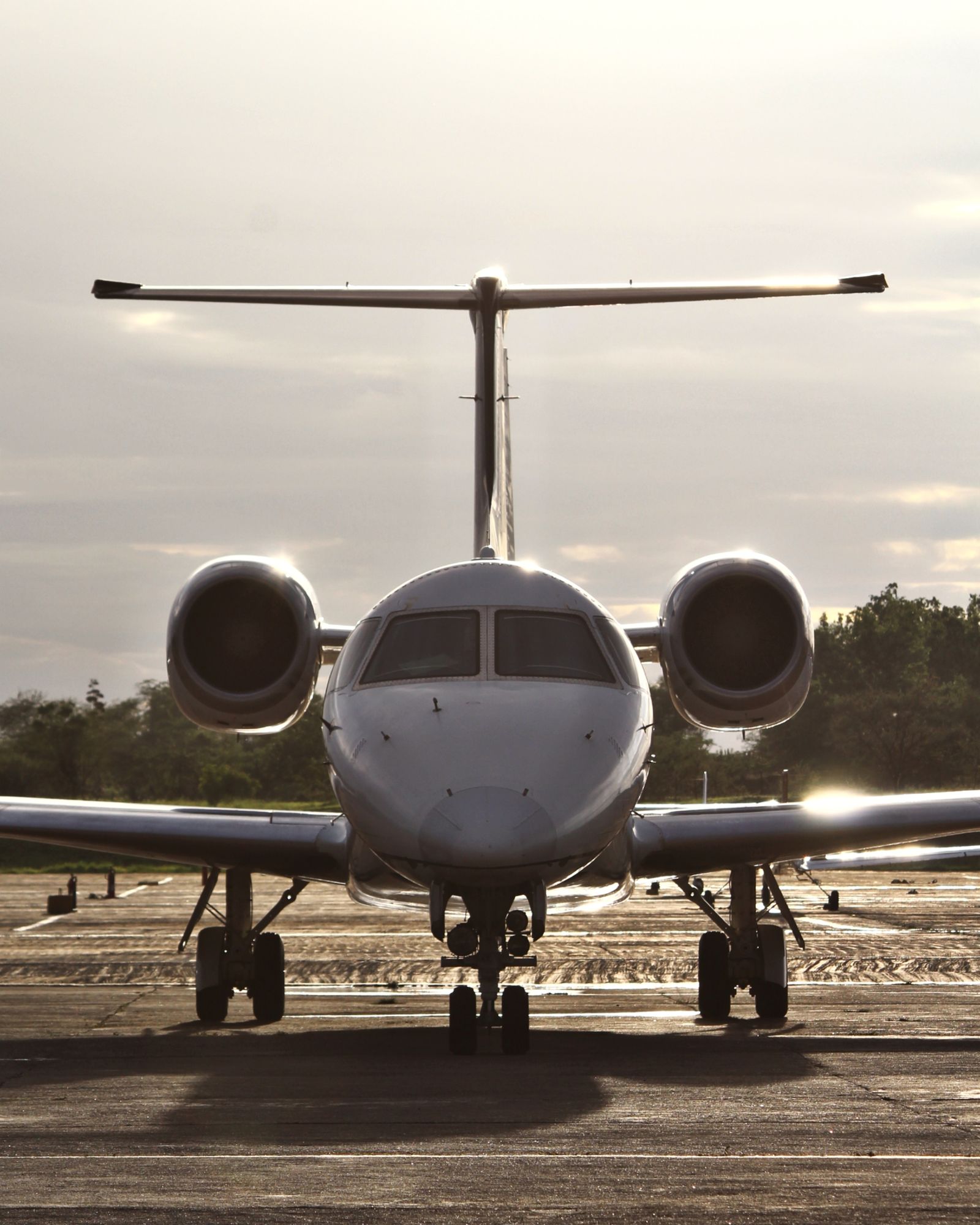
Operators surface these legs through the global empty-leg marketplace rather than advertising them individually, which is how a leg listed by one operator becomes visible to you at all. The price you see has already been set by the operator; the marketplace simply makes it findable and routes your enquiry to a confirmed quote.
The hourly-rate benchmark
The single most useful thing you can carry into an empty-leg search is a rough sense of what an aircraft costs by the hour when chartered normally. It lets you sanity-check whether a listed “deal” is actually a deal, and it stops you overpaying for a leg that has been priced close to full charter because the route is popular.
Charter is sold by aircraft category, and rates scale with size and range. As a working reference for on-demand charter:
| Aircraft class | Typical seats | Indicative charter rate (per hour) |
|---|---|---|
| Light jet | 5–7 | £2,000–£3,500 |
| Midsize | 7–8 | £3,500–£5,500 |
| Super-midsize | 8–9 | £5,000–£7,500 |
| Heavy jet | 10–14 | £7,500–£12,000 |
| Ultra-long-range | 12–16 | £10,000–£16,000 |
To use it: take the rough flight time, multiply by the hourly rate for the class, and you have the full-charter benchmark. A two-hour light-jet hop is roughly £4,000–£7,000 chartered outright. An empty leg on that same route should sit meaningfully below that — and if it doesn’t, it isn’t much of a saving. The benchmark is also why the deepest discounts tend to appear on the largest aircraft: a heavy jet repositioning across the Atlantic empty is carrying an enormous cost the operator is desperate to offset.
What you will pay, by route
Real numbers are more useful than percentages. The table below shows indicative full-charter pricing against the empty-leg range you might realistically catch on some of the most-flown private routes out of the UK and into the Mediterranean. Treat these as illustrative — the live figure depends entirely on the specific leg, the aircraft and the date.
| Example route | Typical jet | Full charter | Empty-leg range |
|---|---|---|---|
| London–Nice | Light jet | £9,000–£14,000 | £4,000–£7,000 |
| London–Geneva | Light / midsize | £10,000–£16,000 | £4,500–£8,000 |
| London–Ibiza | Midsize | £14,000–£20,000 | £6,000–£11,000 |
| London–Olbia | Midsize | £15,000–£22,000 | £6,500–£12,000 |
| Paris–Mykonos | Super-midsize | £22,000–£30,000 | £9,000–£16,000 |
| London–New York | Heavy / ultra-long | £60,000–£90,000 | £25,000–£45,000 |
Two things stand out. The proportional saving is similar across the board — roughly half off a confirmed charter is typical for a leg that matches your dates. But the absolute saving grows enormously with distance and aircraft size, which is why transatlantic and large-cabin legs are where the most money changes hands.

What drives the price
Within those ranges, a handful of factors decide where a given leg lands:
Aircraft class and flight time
The biggest lever by far. Cost is fundamentally hours multiplied by the category rate, so a longer leg on a larger jet is exponentially more expensive — and, in absolute terms, capable of the largest discount.
Which direction the jet is repositioning
Empty legs flow in patterns. Aircraft are pulled towards demand and have to come back from it. That is why you see cheap legs heading out of the Mediterranean in autumn as jets reposition home, and into the Alps at the start of ski season. Flying with the flow is where the bargains are.
How far ahead the leg appears
Most legs surface only days to a few weeks before departure, because they are tied to a confirmed charter the operator has just taken. The closer to departure, the more motivated the operator is to fill the seat — but the less choice you have.
Route popularity
On a heavily flown corridor like London–Nice, operators know the leg will sell, so the discount is shallower. On an unusual pairing, the leg may be priced to clear because there is little natural demand for exactly that journey on exactly that day.
Season and timing
Peak weekends into the Med in summer or the Alps at New Year command a premium even empty; quiet midweek dates in shoulder season are where the price falls away.

Which aircraft you’ll be on
One quirk of empty legs is that you don’t choose the aircraft — the leg does. You are flying whatever jet happens to be repositioning, which means the class is set by someone else’s original booking rather than by your budget. In practice that breaks down predictably. Short European hops are typically light jets — a Citation or Phenom seating five or six. Longer Mediterranean runs and busier routes bring midsize and super-midsize cabins, with more range and a proper stand-up cabin. Transatlantic and long-haul legs mean heavy and ultra-long-range jets — the Challengers, Gulfstreams and Globals that can cross an ocean nonstop.
The upside of not choosing is that you frequently end up on a larger, newer or more capable jet than you would have chartered for the same trip, simply because that is the aircraft that needed to move. The thing to hold in mind is the link back to price: the larger the jet, the higher the hourly cost — but also, on a repositioning leg, the deeper the discount the operator is willing to take to avoid flying it empty. It is why the most eye-catching savings tend to appear on exactly the aircraft you would never normally charter.

It is worth saying that this transparency is part of what makes the model work for you. Because the leg is sold to clear, the operator has no incentive to bury costs — the goal is simply to put a paying passenger on a flight that is leaving anyway. A clear, all-in quote is the norm, not something you have to extract.
What’s included — and what isn’t
The headline figure on an empty leg almost always covers the aircraft, the crew, fuel, and standard handling at the listed airports. That is the bulk of the cost, and for most legs the price you see is the price you pay. But it is worth knowing what can sit on top, so a confirmed quote never surprises you:
- Landing and handling at certain airports. Slot-constrained or premium fields can carry materially higher fees, particularly during events.
- De-icing in winter. A weather-dependent charge on cold-weather departures, applied at cost.
- Overnight crew costs. On legs where the crew has to stay over before returning, those costs can be reflected.
- Catering beyond the standard offering. Light refreshments are typically included; a full catered service is an add-on.
- Ground transport and taxes. Transfers are separate, and the usual duties and taxes for the route apply.
None of this changes the basic economics — an empty leg remains dramatically cheaper than chartering the same aircraft outright. It simply means the right question to ask is always “what does the confirmed, all-in quote come to?”, which is exactly what surfacing the leg through the marketplace gives you.
The per-person maths
The figure that matters is rarely the headline price — it is the price divided by the number of people travelling, because you are buying the whole aircraft, not a seat. This is where empty legs stop being a luxury indulgence and start being arithmetic.
Take a light-jet London–Nice leg listed at £5,000. Travelling alone, that is £5,000 — comfortably more than a flexible business-class ticket, and only worth it for the privacy and the schedule. But the same aircraft seats six. Fill it, and the leg is £833 a head, door to door, through a private terminal, on your timing. Step up to a midsize London–Ibiza leg at £8,000 with eight aboard and you are at £1,000 per person — for a journey that would cost more than that in flexible fares on a busy summer weekend, and take far longer once you account for the airport.
The lesson is simple: empty legs reward groups. A solo traveller pays a premium for the experience; four to eight people travelling together frequently land at a per-person figure that rivals — and sometimes undercuts — premium-cabin commercial fares, while gaining several hours and the entire airport experience.
It is also worth knowing that the same leg can be priced differently depending on how close it is to departure. A leg listed three weeks out at a firm figure may soften in its final days if it hasn’t sold — but that is a gamble, because the more likely outcome is that someone else takes it, or the aircraft’s plans change and the leg vanishes. The discount is genuine the moment it appears; waiting for a better one usually costs you the flight.
When empty legs are cheapest
Price and availability both move with the calendar, and a little flexibility is worth more than any negotiation.
The cheapest legs tend to appear midweek, in shoulder season, and against the prevailing direction of demand. A Tuesday repositioning out of the Med in late September, after the summer rush has thinned, is the archetype of a bargain leg. The most expensive — even empty — are the dates everyone wants: Friday evenings into the Riviera in July, the days bracketing a major event, the New Year window into the Alps.

There is a trade-off underneath this. The further ahead you plan, the less choice you have, because most legs haven’t been listed yet. The more flexible you are on date and airport, the more legs you can catch — which is the entire logic behind watching a route rather than searching it once.
A concrete comparison helps. Four people flying London to Nice on a flexible business-class fare on a peak Friday can comfortably spend £1,000–£1,500 each by the time they have paid for changeable tickets and lost half a day to the airport. The same four on a £5,000 empty leg pay £1,250 a head — in the same ballpark on cost, but through a private terminal, on their own schedule, landing minutes from the apron rather than fighting the summer crush at the main airport. That is the calculation that makes empty legs compelling for the right trip.
Cheaper than first class?
For the right trip, genuinely yes. Split across a group, the per-person cost of an empty leg frequently lands in the same territory as flexible business or first-class fares — and occasionally below them — while delivering an experience that no commercial cabin can match: a private terminal with no queues, departure on your schedule rather than the airline’s, and direct routing into airports far closer to where you are actually going.
Where it doesn’t stack up is the solo, price-first traveller with fixed dates. If you are one person who must fly on an exact day, a well-timed commercial fare will usually win on cost, and an empty leg becomes a question of whether the experience is worth the premium. The honest answer is that empty legs are at their most compelling for small groups with a little flexibility — precisely the people for whom the per-person maths and the perishable inventory line up.
Scale matters too. On a transatlantic leg, the arithmetic is at its most dramatic: a heavy jet that lists at £30,000 empty against a £75,000 confirmed charter is already half price, and split across ten or twelve travelling together it lands near £2,500–£3,000 a head — for a private, nonstop ocean crossing on your own schedule. The bigger the aircraft and the longer the leg, the more a full group changes the maths in your favour.
How to bring the price down
You cannot haggle a repositioning flight, but you can dramatically improve what you pay by changing how you look for it:
- Be flexible on the date. A leg that is wrong by a day is still a no. Widen your window and far more inventory comes into reach.
- Watch nearby airports. A leg into Cannes-Mandelieu or Saint-Tropez may serve a trip you were thinking of as “Nice”. Treating a region rather than a single field multiplies your options.
- Let the route watch itself. Because legs surface unpredictably and sell within hours, the highest-leverage move is a standing alert on your corridor, so you are told the moment a match appears rather than refreshing a search page and hoping.
- Travel as a group. Every additional passenger lowers the per-person figure on a price that is fixed for the whole aircraft.
Do those four things and the difference between an occasional, expensive private flight and a genuinely good-value one is mostly a matter of patience and timing.
Common questions
How much does an empty leg flight cost?
Anywhere from a few thousand pounds for a short European light-jet hop to tens of thousands for a transatlantic heavy jet — typically 25–75% below the equivalent on-demand charter for the same aircraft and route. The live figure depends on the specific leg and is confirmed on enquiry.
Why are empty legs so much cheaper?
Because the flight is already happening. The aircraft has to reposition after a one-way charter, and the operator would otherwise fly it empty at full cost. Listing the leg at a discount recovers some of that cost, so the saving is structural, not promotional.
Can I negotiate the price?
Not in the way you would haggle a hotel. The operator sets the figure based on their position on that leg. What you can influence is which legs you see — being flexible on dates and airports, and watching a route, surfaces cheaper inventory than a single fixed search.
What does the price include?
Generally the aircraft, crew, fuel and standard handling at the listed airports. Items such as premium-airport fees, winter de-icing, extended catering, ground transport and taxes can sit on top, which is why the right reference point is always the confirmed all-in quote.
Are there hidden fees?
There shouldn’t be surprises if you ask for the all-in figure up front. The variables to confirm are airport handling, any de-icing, and catering — all quoted transparently before you commit.
Is the price per person or for the whole jet?
For the whole aircraft. You divide it by your group size to get the per-person cost, which is why empty legs reward travelling together.
Are empty legs cheaper than first class?
For a group with some flexibility, often yes — the per-person figure can rival or beat flexible premium-cabin fares, with a private terminal and your own schedule on top. For a solo traveller on fixed dates, a commercial fare usually wins on pure cost.
How far in advance do empty legs appear?
Usually days to a few weeks before departure, because each leg is tied to a charter the operator has just confirmed. Planning months ahead gives you less to choose from, which is why a standing route alert tends to beat early searching.
Do empty-leg prices change?
They can. As departure approaches and the leg remains unsold, an operator may lower the price to fill it — but waiting risks the leg selling or the aircraft’s plans changing. The discount is real the moment you see it.
What is the single best way to get a good price?
Flexibility plus a route alert. Tell the marketplace the corridor you want, stay open on the exact date, and let it tell you when a well-priced leg appears — rather than searching once and concluding nothing is available.
More from the journal.

Empty legs, explained

How to find empty legs
How to book an empty leg