Quick answer
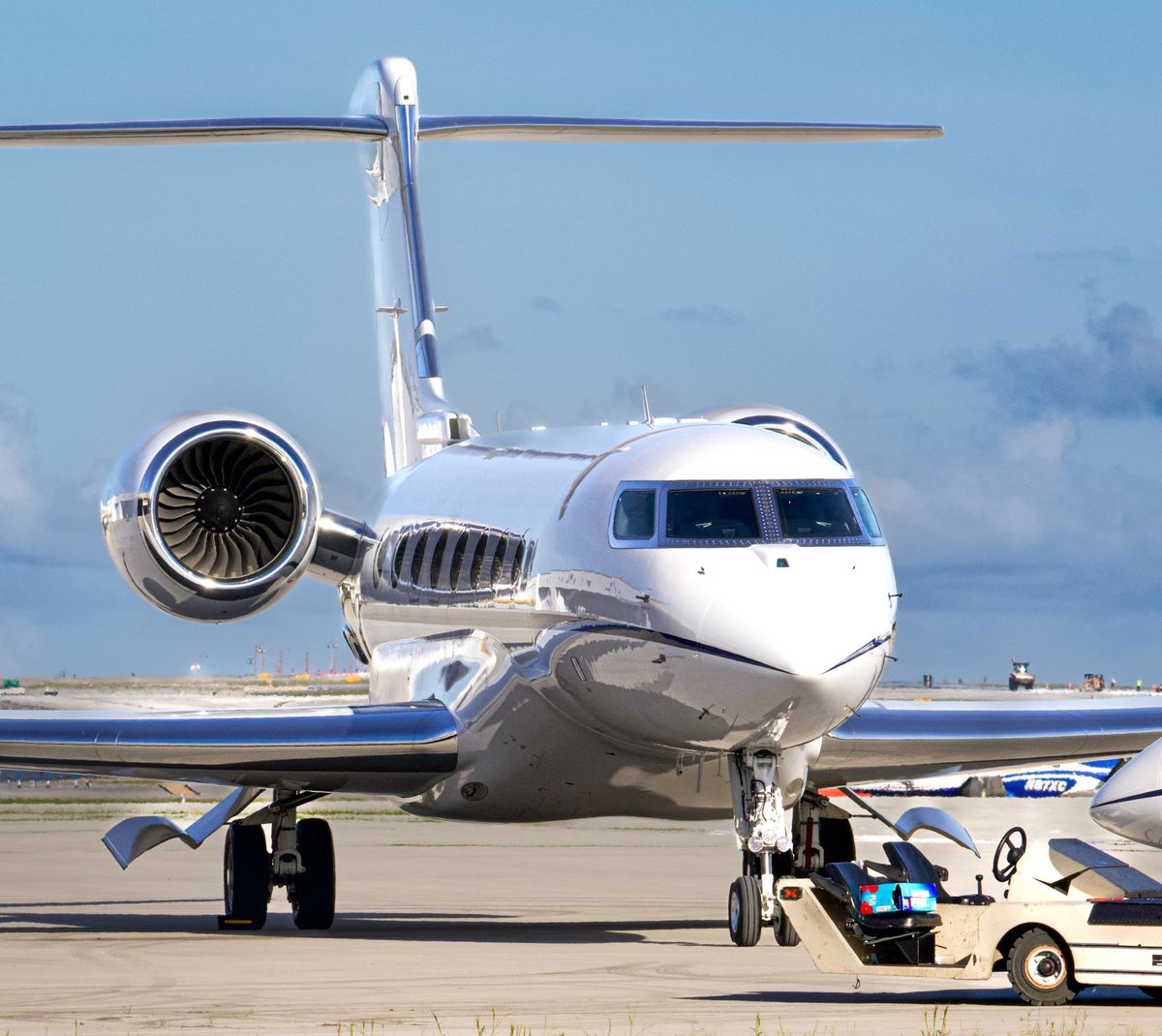
Turboprop charter cost is typically £1,400–£2,200 per flying hour for aircraft such as the Pilatus PC-12 and King Air 350 — the lowest rate in private aviation. Turboprops win on short hops and short island runways such as Alderney and St Barths; on longer trips a light jet is faster and roughly level on cost. Indicative only — the live figure is confirmed on enquiry.
Key takeaways
- Turboprops charter at roughly £1,400–£2,200 per flying hour — the lowest rate in private aviation.
- The PC-12 is the versatile single-engine choice; the King Air 350 is the twin with up to eleven seats.
- On short hops a turboprop is cheaper; on longer trips a light jet is faster and roughly level on cost.
- Short island runways — Alderney, St Barths, many Greek islands — are where turboprops are often the only private option.
- Split across eight people, a turboprop is the cheapest per head in private aviation.
What does turboprop charter cost?
A turboprop is a turbine-engined aircraft that drives propellers rather than producing jet thrust. For charter, that means a pressurised, comfortable cabin for six to nine passengers, a cruise speed somewhat below a light jet's, and one very useful talent: getting in and out of short runways that most jets cannot use.
Indicative turboprop charter rates run at roughly £1,400–£2,200 per flying hour for aircraft such as the Pilatus PC-12, the Beechcraft King Air 350 and the Daher TBM. That is the lowest hourly rate in private aviation and the same benchmark used in our private jet charter cost guide. As with every class, fuel surcharges, landing and handling fees and any repositioning are added on top.
A useful definition: turboprop charter cost is the price of a whole propeller-turbine aircraft and its crew, billed by flying hour. It is the cheapest way to charter a whole aircraft — but whether it is the cheapest way to make a particular trip depends on the distance, as the comparison further down shows.
Turboprop charter cost by aircraft: PC-12 and King Air
Two aircraft dominate turboprop charter in Europe: the single-engine Pilatus PC-12 and the twin-engine King Air 350 family. The table shows their published specifications against the class rate, with a light jet for comparison.
| Aircraft | Engines | Max range | Cruise | Charter / hr | Good for |
|---|---|---|---|---|---|
| Pilatus PC-12 NGX | Single turboprop | 1,803 nm | Up to 290 kt | £1,400–£2,200 | Short runways, islands, regional fields |
| King Air 350 / 360 | Twin turboprop | 1,806 nm | About 312 kt | £1,400–£2,200 | Larger groups, up to 11 seats on reduced fuel |
| Citation CJ3 (light jet, for comparison) | Twin jet | 2,040 nm | Up to 416 kt | £2,000–£3,200 | Longer European sectors |
Specifications from published sources: PC-12 NGX, King Air 360, Citation CJ3 Gen2. Ranges are published maximums at light loads. Rates are indicative GBP benchmarks; the live figure is confirmed on enquiry.
PC-12 charter cost
The PC-12 is the most widely chartered turboprop in Europe, and its strength is versatility. Published figures put its take-off distance at around 2,458 ft and landing distance at around 2,170 ft, with a maximum range of 1,803 nm — enough to reach the Mediterranean from London. The cabin is roomy for the class, with a large cargo door that makes it popular for skis, golf bags and bulky luggage. A PC-12 charter cost typically sits in the lower to middle part of the £1,400–£2,200 band.
King Air charter rates per hour, and the King Air 350
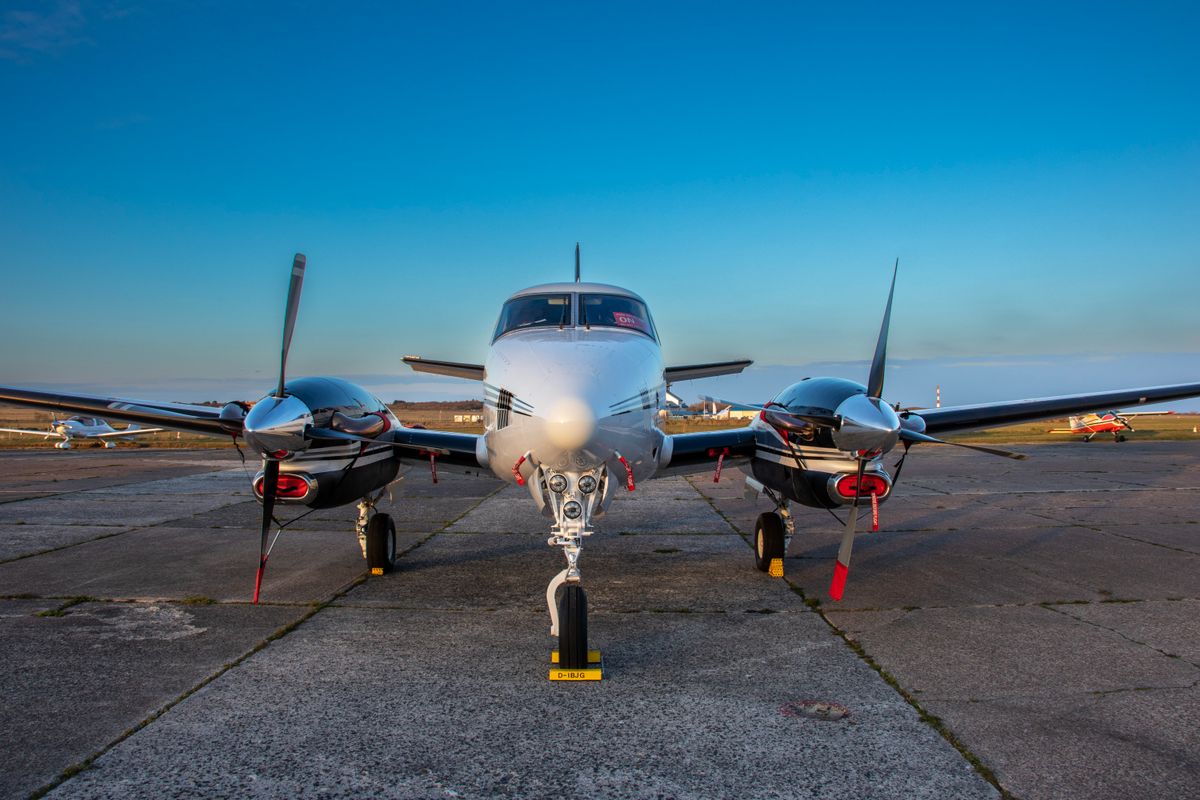
The King Air 350 and its update, the 360, are twin-engine turboprops with up to eleven seats in a double-club layout on reduced fuel, about 1,806 nm of range and a cruise of around 312 knots. King Air charter rates per hour usually sit in the middle to upper part of the turboprop band, reflecting the second engine and the larger cabin. A King Air 350 charter cost makes particular sense for groups of seven to nine, or for travellers who simply prefer two engines.
Smaller single-engine turboprops such as the Daher TBM series also appear on charter. They are fast for the class but carry fewer passengers, so they suit two to four people more than a full group.
Turboprop vs jet: which is actually cheaper?
The turboprop's hourly rate is lower, but it flies more slowly, so it bills more hours for the same distance. The honest answer to "turboprop vs jet" is that the hourly saving shrinks as the trip gets longer. Here is a simple illustration using published cruise speeds and the class rate bands. It ignores taxi, climb and descent, so treat it as a guide to the shape of the comparison, not a quote.
| Sector | Turboprop (~290 kt) | Light jet (~420 kt) | What it shows |
|---|---|---|---|
| 150 nm | ~31 min | ~21 min | Both usually hit an operator's minimum billable time, so the turboprop's lower hourly rate wins |
| 300 nm | ~62 min · £1,450–£2,275 | ~43 min · £1,430–£2,285 | Aircraft cost is now roughly level; the jet is 20 minutes quicker |
| 600 nm | ~124 min · £2,900–£4,550 | ~86 min · £2,855–£4,570 | Level on cost, the jet is nearly 40 minutes quicker and usually the better choice |
Illustrative arithmetic only: cruise time multiplied by the indicative class hourly band. Real block times, minimum charges, fees and positioning vary. The live figure is confirmed on enquiry.
So a turboprop is genuinely cheaper on short hops, roughly level on medium ones, and slower without being cheaper on longer ones. What the arithmetic leaves out is often decisive, though: a turboprop may be able to land at an airport much closer to where you are going, it may already be based nearby, and it may be the only aircraft that can use the runway at all. For longer European trips, our light jet charter cost guide is the natural comparison.
Short hop or island trip? Check a live price for your route — turboprop or jet.
Check a price →What a turboprop trip costs in practice
Turn the hourly band into real trips and the numbers are modest by private-aviation standards. A one-hour hop with the aircraft already positioned comes to roughly £1,400–£2,200 for the aircraft, before fees. Split across eight people, that is about £175–£275 each.
A day trip with two flying hours in total — out in the morning, back in the evening — comes to roughly £2,800–£4,400 for the flying, plus landing and handling at both ends and any parking while the aircraft waits. Many operators apply a minimum billable time per day, so a very short hop can cost more per hour than the headline rate; ask what the minimum is before you compare quotes.
As with every class, the biggest variable is positioning. A turboprop based at Biggin Hill quoting a Biggin Hill departure will price very differently from one that has to fly in from the continent first. The good news is that turboprops are often based at regional airfields, so there may be one closer to you than you would expect.
Worked example: turboprop charter cost from London to Jersey
The Channel Islands are the clearest real-world test of turboprop against jet, because the flight is short and both types fly it regularly. LunaJets' route data gives these typical times between London and Jersey: a Pilatus PC-12 NGX at about 55 minutes, a King Air B200 at about an hour, and a Phenom 300 light jet at about 50 minutes. The jet saves five to ten minutes. Here is what that costs.
| Aircraft | London – Jersey, typical time | Flying-time cost, outbound sector | One way, incl. the flight home (or a short-stay return) | Per person, six aboard |
|---|---|---|---|---|
| Pilatus PC-12 NGX (turboprop) | about 55 min | £1,400–£2,200 | £2,800–£4,400 | about £467–£733 |
| King Air B200 (turboprop) | about 1h | £1,400–£2,200 | £2,800–£4,400 | about £467–£733 |
| Phenom 300 (light jet) | about 50 min | £2,000–£3,200 | £4,000–£6,400 | about £667–£1,067 |
Assumes each sector bills about one hour, which is typical where an operator applies a one-hour minimum. The one-way column is flying out and back × the class band, because the aircraft flies home either way; a same-day or short-stay return on the same aircraft costs about the same. Landing, handling, fuel surcharge and taxes are extra. Indicative and rounded; the live figure is confirmed on enquiry.
The outbound column is only the flying-time part; the one-way column is what a quote is built on, since the operator has to get the aircraft home. On a hop this short, the turboprop saves roughly a third of the aircraft cost for a few minutes of extra flying. That is the case for turboprop charter cost in a nutshell. Stretch the same comparison to Nice, about two hours in a light jet, and the turboprop's slower cruise eats the saving, as the turboprop vs jet table above shows.
Two practical notes. First, ask whether the operator bills actual flight time or a fixed minimum, because on a 55-minute sector that alone can move the price. Second, if you are staying on the island for a few days, compare a return with the aircraft waiting against two one-way trips with the aircraft going home in between. The second roughly doubles the flying, but on short hops it can still be cheaper, because parking and crew nights can cost more than the extra flying.
Single-engine turboprops and the charter rules
Many travellers ask whether a single-engine aircraft such as the PC-12 is allowed to carry charter passengers in cloud or at night. It is, but only under a specific approval. Under the UK air operations rules, a single-engined turbine aeroplane on commercial air transport may fly at night or in instrument conditions only if the operator holds a SET-IMC approval granted by the UK Civil Aviation Authority. EASA adopted the equivalent framework for European operators.
For the passenger, the practical point is simple. If you are chartering a single-engine turboprop and your trip could involve cloud, an early start or an evening return, ask the operator to confirm it holds SET-IMC approval for that aircraft. Without it, the flight is restricted to daytime in good weather, which on a British winter afternoon can mean a delay or a cancelled leg. A twin such as the King Air does not need this approval, which is one reason some travellers pay the slightly higher King Air charter rate.
Short hops and islands: where turboprops come into their own
Islands are where turboprop charter makes the strongest case, because island runways are often short and the distances are often small.
The Channel Islands
Jersey and Guernsey both take jets — Guernsey's runway is 1,463 m — but the hop from the south of England is short enough that a turboprop's lower hourly rate usually wins. Alderney is another matter: its main asphalt runway is 880 m, and the island's scheduled service is flown by small turboprops. For a group heading to Alderney, a turboprop is the natural private option, and for Jersey or Guernsey it is usually the cheapest.
The Greek islands
Mykonos and Santorini take jets, so a light or midsize jet can fly you there direct from London; see our Mykonos private jet hire page. The turboprop's role in Greece is the onward hop and the smaller islands. Many island runways are short: Leros is 1,012 m and limited to small aircraft, and Kastellorizo is 798 m. A common pattern is to fly a jet into Athens (see our private jet hire Athens page) or a larger island, then use a turboprop for the last leg, or to island-hop by turboprop for a week rather than keep a jet waiting.
St Barths
St Barths is the textbook case. The runway is about 2,100 ft (roughly 640 m) long, private jets cannot land there, and only aircraft up to the size of a 19-seat Twin Otter operate. Pilots need specific training and an evaluation on the airport's procedures, renewed every six months. Most private-jet travellers fly into St Maarten and take a short turboprop or scheduled hop across — around 80% of private-jet passengers arriving at St Maarten continue to St Barths. If you are planning that connection, ask whether the operator's pilots hold the St Barths qualification, and see our St Barths private jet hire page for the wider picture. For the rest of the region’s airports and runways, see our guide to flying a private jet to the Caribbean.
Turboprop hire from London
Turboprop hire from London works from the same business-aviation airports as jets — Farnborough, Biggin Hill, Luton and Stansted — and the aircraft's short-field ability widens the choice. Biggin Hill in particular handles a lot of smaller aircraft and is convenient for south-east London and Kent. London City's steep approach limits which aircraft can use it, so check with the operator before assuming a turboprop can.
From London, a turboprop is well suited to the Channel Islands, northern France, the Low Countries, the Isle of Man, Scotland and Ireland. For the Mediterranean it is possible, but the time comparison above usually favours a jet. Our London private jet hire page and our guide to London private jet airports cover the airports in more detail.
When a turboprop makes sense
We don't sell aircraft, so here is the straight answer. A turboprop is the right choice when:
- The sector is short. Under about an hour, the turboprop's lower rate usually beats a jet on cost, and the time difference is a few minutes.
- The runway is short. Alderney, St Barths, many Greek islands, alpine strips and private estates — the turboprop may be the only option.
- The airport is closer. If a turboprop can land ten minutes from your destination and a jet needs an hour's drive, the door-to-door maths changes completely.
- There is bulky luggage. The PC-12's cargo door suits skis, bikes and golf bags better than many light jets.
- The group is six to nine. Split across a full cabin, the turboprop has the lowest per-person cost in private aviation — roughly £175–£275 per person per flying hour with eight aboard. See our private jet cost per person guide.
And it is the wrong choice when the trip is long (the jet is faster and roughly level on cost), when there is weather that a jet would simply fly over, or when your group needs more space than six to nine seats — at which point see our midsize jet charter cost guide. For long-haul, turboprops are not in the conversation at all; that is the heavy jet class, covered in our heavy jet charter cost guide.
Turboprop empty legs
Turboprops reposition just as jets do, and their empty legs are priced the same way: 25–75% below the equivalent charter, for a fixed route and date. Because the starting rate is already the lowest in private aviation, a turboprop empty leg can be the cheapest way of all to fly privately. The catch is that turboprop legs tend to be short and regional, so they suit flexible trips within the UK, to the Channel Islands, or between islands, more than a fixed holiday departure.
Watching a short route? Set an alert and we'll tell you when a turboprop or jet leg lists on it.
Set up a route alert →How to check a turboprop quote
- Confirm the aircraft and the airport. Make sure the specific aircraft can use your chosen runway with your load, and in the conditions expected on the day.
- Ask what is included. Fuel, landing and handling, positioning and taxes, each included or itemised.
- Check the operator. UK operators hold an air operator certificate listed by the UK Civil Aviation Authority.
- Ask about special qualifications where they apply, such as St Barths.
With those confirmed, turboprop charter cost is the most affordable way into private aviation — and on the right short hop, the smartest one.
Frequently asked questions
How much does it cost to charter a turboprop?
Indicative turboprop charter rates run at roughly £1,400–£2,200 per flying hour, covering the aircraft and crew. Fuel, landing and handling fees and any repositioning are added on top. The live figure is confirmed on enquiry.
What are King Air charter rates per hour?
King Air rates usually sit in the middle to upper part of the £1,400–£2,200 turboprop band, reflecting the second engine and larger cabin. The King Air 350 seats up to eleven on reduced fuel, which suits groups of seven to nine.
What does a PC-12 charter cost?
A PC-12 typically sits in the lower to middle part of the £1,400–£2,200 hourly band. It is popular for short runways, island hops and bulky luggage, thanks to its large cargo door.
Is a turboprop cheaper than a jet?
Per hour, yes. On short hops it is usually cheaper overall too; on medium and longer sectors, the jet's higher speed means fewer billed hours and the total becomes roughly level, with the jet arriving sooner.
Can a private jet land at St Barths?
No. The runway is about 640 m long and only aircraft up to the size of a 19-seat Twin Otter operate there, flown by specially trained pilots. Private-jet travellers usually fly into St Maarten and take a short turboprop or scheduled hop across.
Can I hire a turboprop from London?
Yes — from Farnborough, Biggin Hill, Luton or Stansted. Turboprops suit trips to the Channel Islands, northern France, the Low Countries, Scotland and Ireland. Check with the operator before assuming London City, as its steep approach limits which aircraft can use it.
How much does a turboprop charter to Jersey cost?
London to Jersey takes about 55 minutes in a PC-12 or about an hour in a King Air B200. The flying alone is roughly £1,400–£2,200 at the turboprop band; because the aircraft also flies home, a one-way quote is roughly £2,800–£4,400 before fees, and a short-stay return on the same aircraft costs about the same. The live figure is confirmed on enquiry.
Can a single-engine turboprop fly charter passengers at night or in cloud?
Yes, if the operator holds a SET-IMC approval from its aviation authority, which in the UK is the Civil Aviation Authority. Without that approval, a single-engine charter is limited to daytime in good weather. Ask the operator to confirm before you book.
Are turboprops safe?
Turboprops are flown commercially by licensed operators under the same air operator certificate framework as jets. Single-engine and twin-engine types both operate on charter; if you prefer two engines, the King Air is the usual choice. Always check the operator holds a valid air operator certificate.
How many passengers fit in a turboprop?
Typical charter turboprops seat six to nine passengers. The King Air 350 can take up to eleven in a double-club layout on reduced fuel, while smaller types such as the TBM suit two to four.