Quick answer
Light jet vs midsize jet comes down to group size, luggage and distance. A light jet such as a Phenom 300 or CJ3 seats five to seven, flies about 2,000 nm at best and charters for roughly £2,000–£3,200 an hour. A midsize such as a Citation XLS or Latitude seats seven to eight, has a taller cabin and more baggage space, and costs roughly £3,000–£4,400 an hour.
Key takeaways
- Light jets seat five to seven in a stooping cabin. Midsize jets seat seven to eight with a taller, sometimes stand-up cabin.
- A midsize costs roughly a third to a half more per hour, but the per-person gap narrows with a full cabin.
- Luggage is the most common reason to step up. Skis and full-size cases fill a light-jet hold quickly.
- For short European hops with five or fewer people, a light jet is usually the better value.
- On empty legs you fly whatever is repositioning, and a midsize leg can cost less than a light jet chartered outright.
Light jet vs midsize jet is the most common choice in European private aviation. Most trips from the UK to the Riviera, the Alps or the Balearics could be flown in either class, and the price gap between them is real. This guide compares the two on cabin, range, luggage and cost, and is honest about when the bigger aircraft is worth the money and when it isn't. For how chartering works more broadly, from quotes to contracts, start with our guide to private jet charter flights.
What is the difference between a light and a midsize jet?
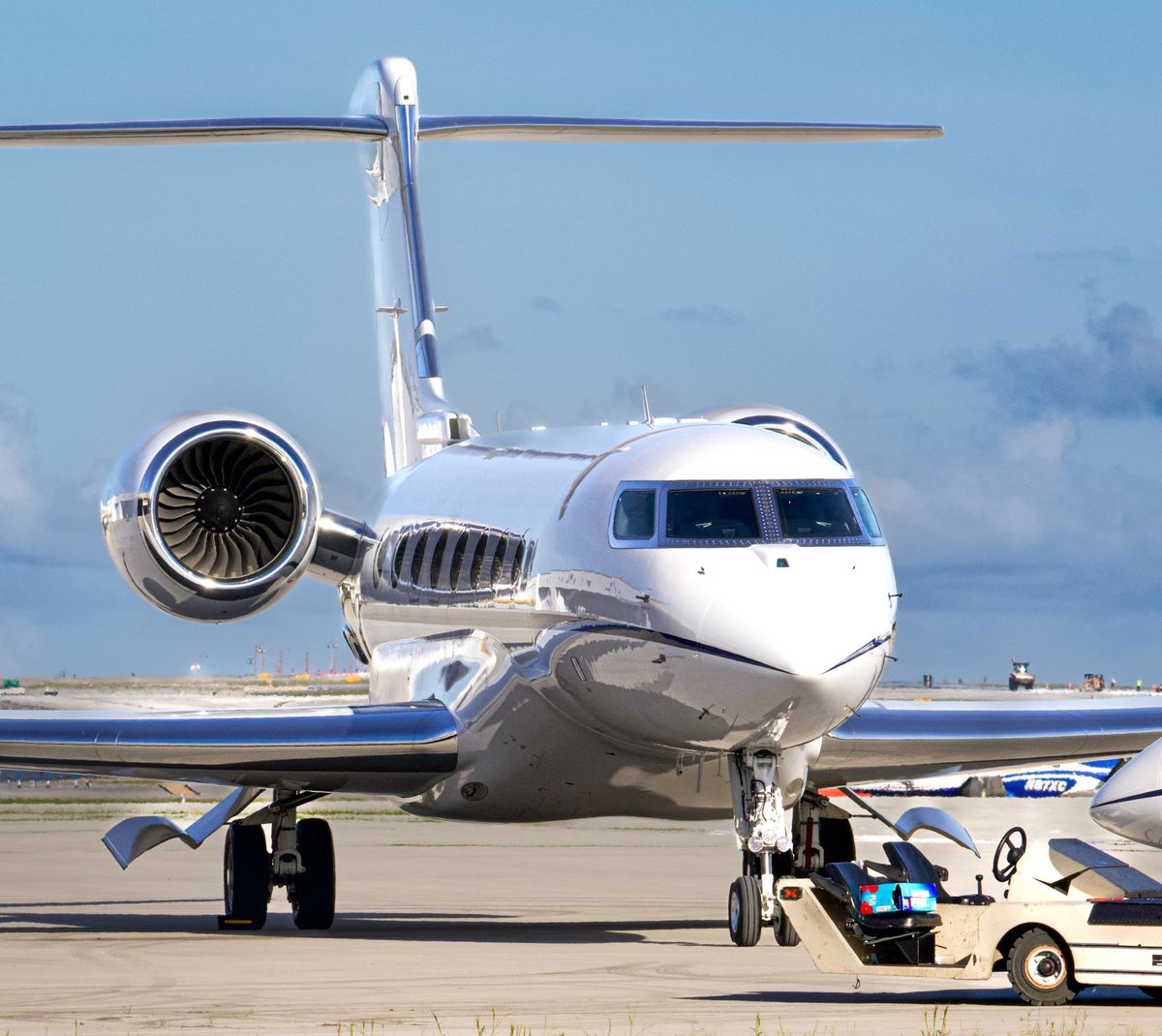
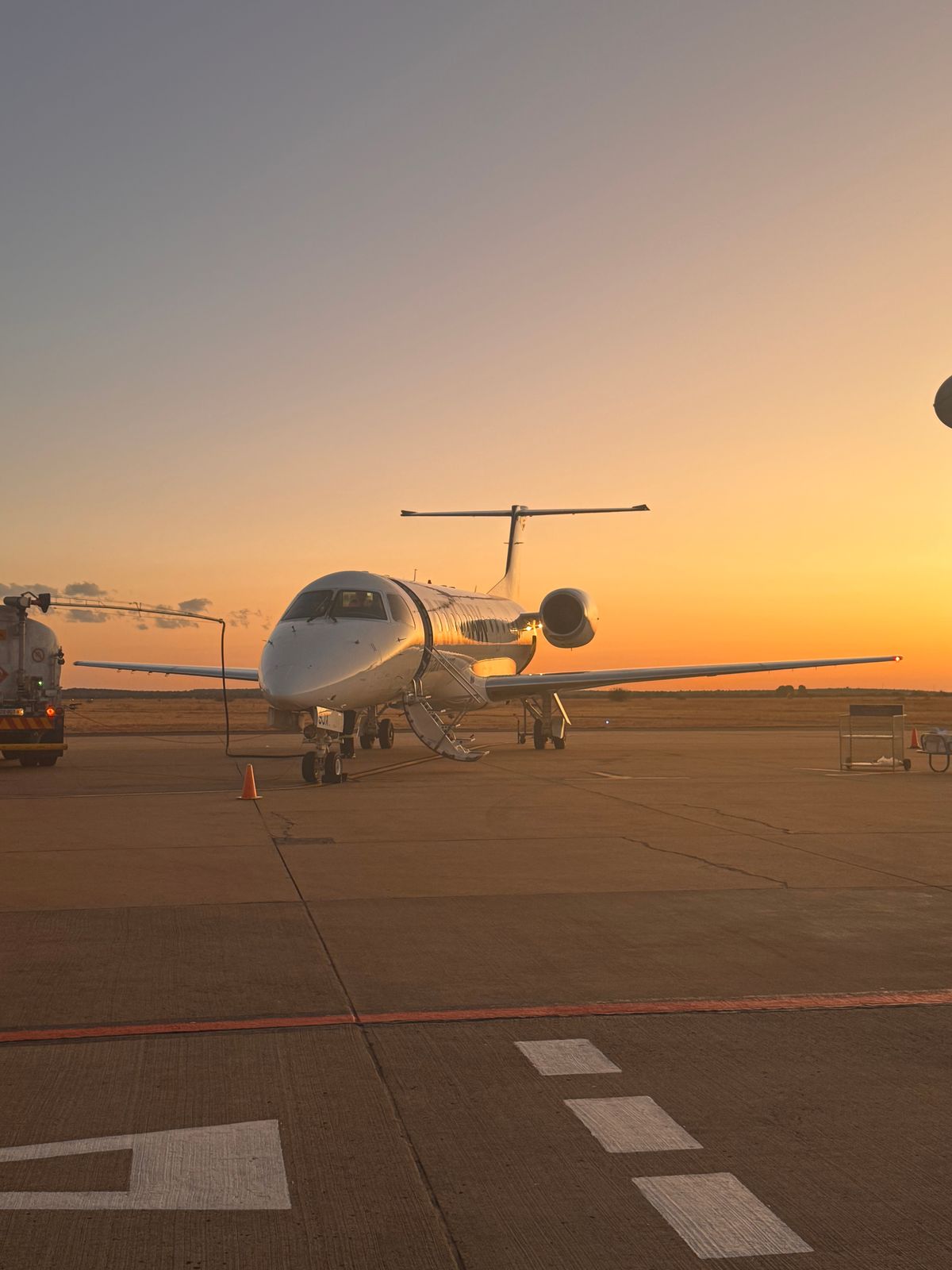
A light jet is a small business jet that typically seats five to seven passengers, flies short and medium sectors, and has a cabin you stoop in. A midsize jet seats seven to eight, flies further, and has a taller cabin, in the newer models one you can stand up in. The common examples on the charter market are the Embraer Phenom 300 and Cessna Citation CJ3 for light, and the Citation XLS and Citation Latitude for midsize, with older Hawker and Learjet models in both classes.
The two classes overlap more than the labels suggest. A Phenom 300E is a fast, capable light jet that outperforms some older midsize aircraft. The real differences are cabin height, baggage space, comfortable range and, consequently, price.
Light vs midsize private jet: side by side
The table uses manufacturer and published specification figures for the common charter types, and this site's indicative house rates for charter cost.
| Light jet | Midsize jet | |
|---|---|---|
| Typical aircraft | Phenom 300E · Citation CJ3 | Citation XLS · Citation Latitude |
| Typical seats | 5–7 | 7–8 |
| Cabin height | About 4 ft 9 in (CJ3) to roughly 5 ft (Phenom 300E) | 5 ft 8 in (XLS) to 6 ft (Latitude) |
| Maximum range | About 2,000 nm (Phenom 300E 2,010 nm; CJ3 Gen2 2,040 nm) | 2,100 nm (XLS Gen2) to 2,700 nm (Latitude) |
| Baggage | 65 cu ft (CJ3) to 84 cu ft (Phenom 300E, total) | About 90 cu ft (XLS) to 127 cu ft (Latitude) |
| Indicative charter rate | £2,000–£3,200 per hour | £3,000–£4,400 per hour |
| Typical use | Short European hops, small groups | Longer Mediterranean runs, larger groups and more luggage |
Specifications: Embraer Phenom 300E, Citation CJ3 Gen2, Citation XLS Gen2, Citation Latitude. Range figures are maximums under stated conditions. Real range with full seats and bags is shorter. Charter rates are indicative and the live figure is confirmed on enquiry.
Cabin: the difference you notice most
On board, the difference you feel first is height. In a CJ3, with a cabin of about 4 ft 9 in, everyone moves between seats bent over. The Phenom 300E is a little taller but still a stooping cabin. On a one-hour hop to Paris that hardly matters, because you board, sit and get off.
Midsize changes that. The Citation XLS, at 5 ft 8 in, is close to stand-up for many adults, and the Citation Latitude, at a full 6 ft with a flat floor, is a cabin you can walk through normally. Over three hours, with children, older passengers or anyone who wants to stretch, that is worth having.
Width and seating follow the same pattern. Light jets usually seat passengers in a club-four arrangement plus one or two side-facing or extra seats. Midsize cabins add more full-sized seats and room around them. For six adults, a light jet is full. In a midsize jet the same group has spare space.

Range and the routes each class suits
Published range figures are best-case. The ranges in the table assume light loads and standard reserves. Fill every seat, add a full baggage hold and fly into a headwind, and the practical range drops.
In practice, from the UK:
- Paris, Geneva, Amsterdam and short domestic legs are light-jet trips. A midsize adds cost without adding much.
- The Riviera, the Alps and northern Spain can go either way. A light jet flies London to Nice comfortably (see private jet hire Nice for the airport and live legs), and the choice comes down to group size and luggage.
- The Balearics, southern Italy and the Greek islands lean midsize, especially with a full cabin. A light jet can often make the trip, but range margins narrow with a heavy load.
- Anything much further is super-midsize territory. See the super-midsize jet charter cost guide.
A light jet that needs a fuel stop on a long sector loses its price advantage. A stop adds time, a landing fee and handling charges, and can make the midsize the cheaper option overall. A good operator will tell you if your route and load are close to the limit.
Is a midsize jet faster?
Not necessarily. The fastest common light jet is about as quick as the midsize jets it competes with. Embraer quotes a high-speed cruise of 464 knots for the Phenom 300E. Textron lists 446 knots for the Citation Latitude, and published figures put the CJ3 Gen2 at 416 knots and the Citation XLS at around 441 knots.
On a two-hour European sector, those differences come to a few minutes either way. Speed should not decide between the classes. Group size, luggage and range should. Where flight time does matter is on longer sectors, where a fuel stop on the smaller aircraft adds far more time than any difference in cruise speed.
Luggage, skis and golf bags
Baggage is where light jets most often catch people out. A CJ3's 65 cubic feet of internal space fills quickly with five people and a week's worth of cases. The Phenom 300E is better, at 84 cubic feet in total, but it is still a light jet. Skis, golf bags and large hard-shell suitcases are where the gap shows.
Midsize aircraft carry noticeably more. The Citation Latitude lists 127 cubic feet. For a ski trip with four or more people and equipment, or a summer villa week with full-size cases, that space often decides it. See private jet baggage allowance for the detail, and give your operator an honest bag count when you book.
Not sure which class your trip needs? Check a price — live options in both classes on your route.
Check a price →Light jet vs midsize jet: what each costs
On this site's indicative benchmarks, a light jet charters for roughly £2,000–£3,200 per hour and a midsize for roughly £3,000–£4,400. The midsize costs about a third to a half more per hour. The class guides go into detail: light jet charter cost and midsize jet charter cost.
Applied to a real route, indicatively:
| London → Nice (one way) | Light jet | Midsize jet |
|---|---|---|
| Full charter | £9,000–£14,000 | £14,000–£22,000 |
| Empty leg | £4,000–£7,000 | £4,500–£11,000 |
| Seats | Up to 6 | Up to 8 |
| Per person, full cabin (empty-leg example) | £5,000 ÷ 6 ≈ £833 | £8,000 ÷ 8 = £1,000 |
Indicative whole-aircraft prices, one way. London to Nice is roughly two hours' flying, so the flying alone at house rates is about £4,000–£6,400 in a light jet and £6,000–£8,800 in a midsize; a one-way full-charter price also covers the aircraft's positioning or return, which is why it sits higher. The figure on any flight depends on aircraft positioning, the date and the specific type; the live figure is confirmed on enquiry.
The per-person row matters most. With a full cabin, the per-head gap between the classes is much smaller than the headline gap, and for a group of seven or eight, the midsize is the only option anyway. Private jet cost per person works through more examples. For the wider picture across every class, see private jet charter cost.

Runways and airports: does size limit where you land?
Less than people expect, at least between these two classes. Embraer quotes the Phenom 300E's take-off distance at 3,209 ft at maximum weight, sea level and standard conditions. Textron lists the Citation Latitude's take-off field length at 3,580 ft. A few hundred feet apart: on most European airports either aircraft is fine.
The difference shows at the margins. Short runways, steep approaches, hot days and high-altitude airfields all cut what an aircraft can lift, and the smaller, lighter jet keeps more in hand. The Riviera's short-runway airfields and some Alpine strips are the classic cases, where an operator may accept a light jet but restrict or refuse a larger type, or limit the load. Published figures are a guide; the operator's performance calculation for your date, airport and load is what counts.
Worked example: two groups, same route
Two groups are flying London to Nice on the same Friday, one way. The indicative house figures for the route are £9,000–£14,000 for a light jet and £14,000–£22,000 for a midsize, whole aircraft, one way.
- Group A: four friends, a long weekend, soft bags. Four fit easily in a light jet, the bags fit in a 65 cubic foot hold, and the two-hour flight is short enough that stooping hardly matters. At the midpoint of each range, the light jet costs roughly £2,900 a head against roughly £4,500 for the midsize. The light jet is the right call.
- Group B: seven people, a villa week, two sets of golf clubs. Seven is beyond a comfortable light-jet layout, and a week's cases plus golf bags would test any light-jet hold. The midsize is the only sensible option, and at the midpoint it works out at roughly £2,600 a head, less per person than Group A's light jet.
The lesson is the one in the table above: compare per person with your real group, not the headline price. A bigger aircraft that you fill can be better value than a smaller one you don't. Every figure here is indicative, and the live figure is confirmed on enquiry.
Which should you choose?
A short, honest decision guide:
- Choose a light jet if you are five or fewer, the flight is under about two and a half hours, and you are travelling with soft bags or modest luggage. It is the better-value aircraft for most short European trips, and paying for a midsize on a Paris run is usually money wasted.
- Choose a midsize jet if you are six to eight, the trip is long enough that standing up matters, you are carrying skis, golf clubs or a week's worth of cases, or a light jet would be near its range limit with your load.
- Consider a step down to a turboprop on very short sectors to small airfields. See turboprop charter cost.
- Consider a step up to super-midsize if you need range beyond about three to four hours, or a full stand-up cabin for a long day.
If you are unsure, describe the trip to the operator: number of people, bags and route. A good operator will suggest the class that fits. For the full range of sizes, see how many seats on a private jet, class by class.
Does the season change the answer?
The class decision rarely changes with the calendar, but the price gap does. On our house figures, peak weeks typically run 15–30% above the benchmark rate, shoulder months sit at the benchmark, and off-peak periods at or below it. Because the uplift is a percentage, it widens the gap in pounds: a midsize that costs £1,000 an hour more than a light jet in a quiet month can cost £1,150–£1,300 an hour more in a peak week.
Peak weeks also thin out availability. In the busiest Riviera and ski weekends, the aircraft you want in either class may simply be booked, and the realistic choice becomes whichever suitable aircraft is free. If your dates are fixed and fall in a peak week, ask for options in both classes at the same time rather than chasing one.
Shoulder and off-peak travel is where the smaller-class saving is easiest to bank. With more aircraft available, you can usually get the exact light-jet type you want, and for a small group the saving over a midsize goes further. For a group that needs the bigger cabin, off-peak is the time a midsize costs least. The private jet charter cost guide linked above sets out the seasonal pattern in full.
Questions to ask before you book either class
Class labels are broad, and two aircraft in the same class can differ more than the averages suggest. Before you commit, ask the operator or broker:
- Which exact type? A Phenom 300E and a CJ3 are both light jets, but the Phenom has more baggage space and a faster cruise. An XLS and a Latitude are both midsize, but the Latitude's cabin is taller and its hold larger.
- How many seats in this layout? Certified maximums include seats you would not use on a charter. Ask for the real number.
- Will my bags fit? Give a count and sizes, including skis, golf clubs, prams and anything hard-shell.
- Is a fuel stop likely? On a long sector with a full cabin, ask whether the light jet can do it non-stop with your load.
- What is the lavatory? On some light jets it is a compact, partly enclosed seat. On a midsize it is usually a proper enclosed washroom, which matters on a longer flight.
- Who operates it, and what audits does it hold? The class tells you nothing about the operator. Our guide to ARGUS vs Wyvern ratings explains what the safety audits check.
Good answers to these questions matter more than the class label. A well-chosen light jet beats a poorly matched midsize, and the other way round.
Empty legs: you may not get to choose
One twist applies to empty legs. You fly whatever aircraft is repositioning, so the class is set by someone else's booking. On short European routes that is usually a light jet. On longer Mediterranean runs, midsize and larger aircraft appear more often.
That can work in your favour. A midsize empty leg on your route often costs less than a light jet chartered outright, so you get the bigger cabin and the lower price. If your group is flexible on class, watch both, and take whichever lists first at the right price.
Set a route alert for both classes and we'll tell you the moment a light or midsize leg lists on your corridor.
Set up a route alert →Frequently asked questions
What is the main difference between a light and a midsize jet?
Cabin size, range and baggage. A light jet typically seats five to seven in a cabin you stoop in. A midsize seats seven to eight, flies further and has a taller cabin, and in newer types such as the Citation Latitude you can stand up.
How much more does a midsize jet cost than a light jet?
On this site's indicative benchmarks, a light jet charters for about £2,000–£3,200 per hour and a midsize for about £3,000–£4,400, so a midsize is roughly a third to a half more per hour. The live figure is confirmed on enquiry.
Can you stand up in a light jet?
Not fully. Light-jet cabins are roughly 4 ft 9 in to 5 ft high, so most adults stoop. The Citation XLS, a midsize, is 5 ft 8 in, and the Citation Latitude is a full 6 ft.
Is a light jet big enough for London to Nice?
Yes. London to Nice is well within light-jet range, and it is one of the most common light-jet routes in Europe. The deciding factors are group size and luggage rather than range.
When is a midsize jet worth the extra cost?
When you are six or more, flying for more than about two and a half hours, carrying skis, golf bags or large cases, or when a light jet would be near its range limit with your load and might need a fuel stop.
Do light jets have room for skis?
Some do, but space is limited. A CJ3 has about 65 cubic feet of internal baggage space, while midsize types such as the Latitude list 127. For a ski group of four or more with equipment, a midsize is usually the safer choice.
Is a midsize jet faster than a light jet?
Not by much. The Phenom 300E, a light jet, has a quoted high-speed cruise of 464 knots, which is comparable to or faster than common midsize types. On a typical European sector, the difference is a few minutes.
Can I pick the class on an empty leg?
No. You fly whatever aircraft is repositioning. That can work in your favour, because a midsize empty leg is often cheaper than a light jet chartered outright.
Which is better value per person, a light or a midsize jet?
It depends on how many of you there are. For four or fewer, a light jet is almost always cheaper per head. For six to eight, a full midsize can cost less per person than a light jet carrying four, because you pay for the whole aircraft. Prices are indicative, and the live figure is confirmed on enquiry.