
Quick answer
An empty leg is a whole private aircraft, discounted 25–75% because the operator was already flying that route. A semi-private or shuttle flight is a single seat on a smaller aircraft sold on a fixed, published schedule between a limited set of city pairs. Empty legs win on price and privacy for a group; shuttle flights win on predictability and price for one or two people on a route they actually fly.
Key takeaways
- An empty leg sells the whole aircraft; a semi-private or shuttle flight sells one seat on a scheduled route.
- Shuttle flights run to a fixed, published timetable between a limited set of city pairs — empty legs don't run to any timetable at all.
- For a solo flyer or pair on a route the shuttle actually serves, the seat price can beat an empty leg's per-person cost.
- For a group, or a route outside the shuttle network, an empty leg is almost always the better value and the more private experience.
Both products draw from the same live private jet hire market — what is actually available on your corridor today decides which makes sense faster than any general rule.
What's actually different between them
The two get confused because both are pitched as "cheaper private flying," but the mechanism behind each is completely different, and that difference is what should actually drive the choice.
An empty leg is a full private aircraft — the same jet, crew and standard used on a full charter — repositioning on a route and date it was already flying, sold at a discount because the operator would rather fill it than fly it empty. You get the whole cabin, whoever you're travelling with, on whatever the jet's own schedule happens to be.
A semi-private or shuttle flight is a different product entirely: a smaller aircraft — often a turboprop or light jet — flying a fixed, published route on a fixed schedule, with individual seats sold to unrelated passengers, much like a scheduled airline but on a much smaller scale and typically from smaller regional airports. Coverage of the semi-private segment consistently frames it as sitting structurally between commercial and full private aviation, rather than as a discount version of either. You're not chartering anything; you're buying a seat on someone else's flight, same as a small airline.
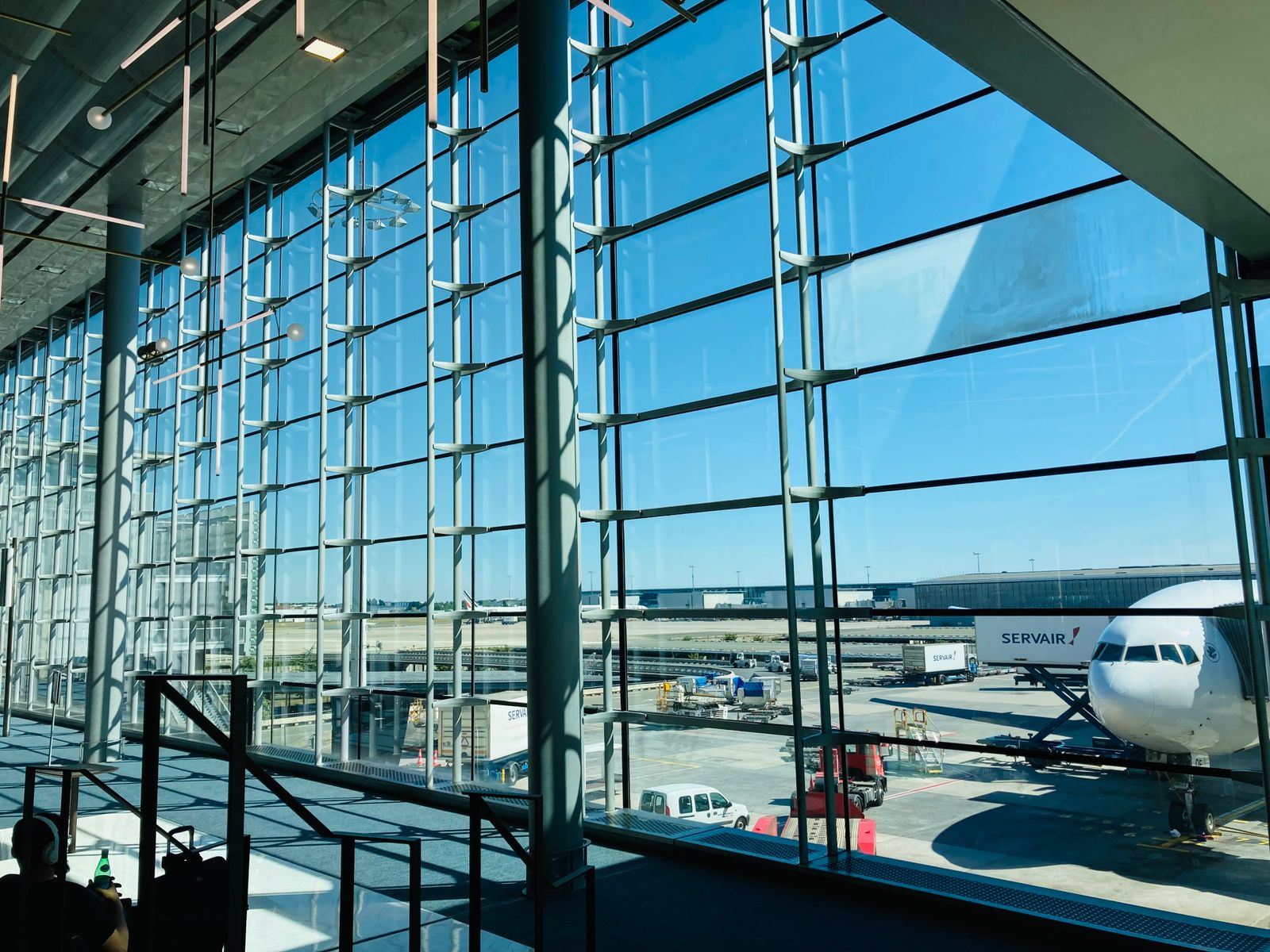
Both sit below full-price charter on cost, and both get marketed under similar language — "private flying without the price tag" — which is exactly why they get conflated. But an empty leg is a discount on the same product as a full charter; a shuttle seat is a genuinely different product, priced closer to a premium airline fare than to private aviation. Understanding that distinction up front makes the rest of this comparison far easier to apply to your own trip.
How the cost actually compares
This is where the two products stop being comparable in any simple way, because they're priced on entirely different bases. A shuttle seat is priced per person, typically in the low hundreds to low thousands of pounds depending on route and aircraft type — closer to a premium scheduled fare than to private aviation pricing. An empty leg is priced per aircraft, commonly a few thousand pounds for a short European hop, which only becomes a per-person figure once you divide it by however many people are actually travelling with you.
Run the numbers both ways and the crossover point becomes obvious. Travelling solo or as a pair, a shuttle seat is very often the cheaper option outright — you're not paying for empty seats you don't need. Travelling as a group of four or more, the maths flips hard in the empty leg's favour, because the whole-aircraft price gets divided across everyone rather than multiplied per seat.
The group of three sits right on the crossover, and it's worth actually pricing both rather than guessing — an empty leg on a short hop can come in level with, or even under, three shuttle seats bought individually, especially once you account for the shuttle network's own peak pricing on popular dates.
When a shuttle flight is genuinely the better choice
Being honest about this is the whole point of this comparison, and there are real situations where a shuttle beats an empty leg outright:
- You're travelling alone or as a pair. Paying for a whole aircraft when two seats would do is rarely the efficient choice, however good the empty-leg discount looks on paper.
- Your route is one the shuttle network actually serves. Shuttle operators run a fixed set of city pairs — if yours is one of them, you get a predictable, bookable seat rather than waiting for a matching empty leg to appear.
- You need a guaranteed departure time, booked well in advance. A shuttle seat on a published schedule is confirmed the moment you book it. An empty leg, by contrast, only exists once it lists — there's nothing to book in advance on a route with no current inventory.
If any of those describes your trip, it's worth checking shuttle availability on your route before assuming an empty leg is automatically the cheaper or more practical option — it frequently isn't, for exactly this kind of journey.

When an empty leg is genuinely the better choice
The reverse holds just as clearly in the other direction:
- You're travelling as a group of three or more. The per-person maths on a whole-aircraft empty leg improves sharply with every additional passenger, and can undercut shuttle-seat pricing well before you reach a full cabin.
- Your route sits outside the shuttle network. Shuttle operators serve a defined, limited set of city pairs — most routes simply aren't covered, and an empty leg's flexibility (any operator, any repositioning route) reaches far further.
- Privacy is genuinely part of what you're paying for. A shuttle seat is private aviation in the sense that it's a small aircraft — but you're travelling with unrelated passengers, on their itinerary, not yours. An empty leg is the whole cabin, exclusively yours for the flight.
See the full cost breakdown by aircraft class for how empty-leg pricing compares to charter more broadly, if group size is the deciding factor for your trip.

What each actually feels like on the day
The cost and reliability comparisons above tend to obscure a simpler difference: the two experiences don't feel alike at the airport, even before the aircraft leaves the ground.
A shuttle flight runs closer to how a premium commercial fare feels than to private aviation as most people picture it. You typically check in at a set time, wait in a small dedicated lounge rather than a general terminal, and board alongside a handful of other passengers you don't know — a scaled-down version of the departure ritual, not an escape from it. The arrival buffer is generally similar to any scheduled flight: turn up with reasonable margin, and the aircraft leaves on time whether you're there early or not.
An empty leg, by contrast, keeps the arrival experience private aviation is actually known for. Because you're the only party on board, there's no queue, no shared lounge, and typically far less notice needed before departure than any scheduled service — arrive when you're ready within the agreed window, and the aircraft goes when you do. The trade-off for that flexibility is the one covered above: the flight only exists because someone else's plans created it, so the schedule bends around a departure window rather than a fixed clock time in the way a shuttle's does.
Neither is better in the abstract — a shuttle seat suits someone who wants private aviation's aircraft without its unpredictability, and an empty leg suits someone who wants the unpredictability traded away in the other direction, for privacy and flexibility instead of a guaranteed slot. Knowing which trade-off you'd rather make is usually a faster way to decide than comparing the two on price alone.
Side by side
| Factor | Empty leg | Semi-private / shuttle |
|---|---|---|
| What you're buying | The whole aircraft | A single seat |
| Route availability | Wherever aircraft reposition | Fixed network of city pairs |
| Schedule | Fixed date, unpredictable in advance | Published timetable, bookable ahead |
| Best for group size | 3 or more | 1–2 |
| Privacy | Exclusive use of the cabin | Shared with unrelated passengers |
| Booking certainty | Only once a leg lists | Confirmed at time of booking |
Availability across the UK and Europe
Worth being direct about this before comparing prices too closely: shuttle-style networks are considerably more developed in North America than across the UK and Europe, where the model exists but on a smaller scale and a narrower set of routes, concentrated around a handful of established regional corridors rather than a dense national network.
Practically, this means the "check the shuttle first" advice above applies more reliably in some corridors than others. Where a genuine seat-based network covers your route, it's worth checking. Where it doesn't — which, for many UK and European city pairs, is the honest reality — an empty leg or a full charter quote remain the two real options, and the shuttle comparison becomes moot for that specific trip rather than a live third choice.
The practical takeaway: don't assume a shuttle option exists for your route before checking. If it does, the comparison in this guide applies directly. If it doesn't, the choice reverts to empty leg versus full charter on its usual terms.
Reliability: which one is more likely to actually happen
This is the honest question the price comparison skips over, and it matters more than either option's headline cost for anyone travelling to something that can't move — a wedding, a meeting, a flight you're connecting onward from.
A shuttle seat, once booked, is about as reliable as a scheduled flight gets in private aviation. The operator runs that route on that timetable regardless of any single passenger's plans, because the whole point of the model is a published schedule other people are also relying on. Delays and occasional cancellations happen, as with any flight, but the booking itself doesn't depend on someone else's itinerary changing.
An empty leg is the opposite by construction. It exists because a specific aircraft owner or charter client changed their plans, or is expected to — and that same fact cuts both ways after you've booked it. If the underlying trip that created the leg gets rescheduled or cancelled before you fly, the leg can be pulled with it, sometimes with very little notice. Reputable operators will rebook or refund when this happens, but the flight itself isn't guaranteed the way a scheduled seat is, and it's worth asking any broker directly what happens if the leg falls through before you commit to something time-critical around it.
The practical rule: for a trip where being late isn't an option, weight that risk into the decision alongside the price. A shuttle seat's schedule certainty can be worth paying for even where an empty leg would be cheaper on paper — and conversely, an empty leg is at its best when your dates have some genuine give either side of the flight.

Baggage, notice period and the practical differences
Beyond price and reliability, the two products differ in ways that only become obvious once you're actually booking. Shuttle networks typically publish a baggage allowance up front, similar to a commercial fare — useful for planning, but a real limit if you're travelling with ski kit, golf clubs or anything oversized. An empty leg, chartering the whole aircraft, generally has far more flexibility on baggage, constrained only by the aircraft's actual hold space rather than a per-passenger policy.
Notice period runs in the opposite direction. Shuttle seats can be booked weeks or months ahead, the same as any scheduled fare. Empty legs typically list from a few hours to a couple of weeks before departure — workable for genuinely flexible travel, but not something to plan a fixed-date trip around without a backup.
A quick worked scenario
Take a genuinely common trip: two friends flying London to Nice for a long weekend, no fixed group beyond the two of them, dates with some flexibility either side.
On a shuttle network that serves this corridor, two seats might run to a combined total in the low-to-mid hundreds of pounds each — a fixed, bookable price the moment the ticket is confirmed. The same trip as an empty leg, if one happens to be listed on a matching date, would price the whole light-jet cabin at a few thousand pounds — split two ways, that's a materially higher per-person cost than the shuttle seats, even before accounting for the empty leg's date uncertainty.
Now change one variable: a group of four making the same trip together. The empty leg's whole-aircraft price, split four ways, likely lands below four individual shuttle seats — and the group gets the cabin to themselves rather than four seats among other passengers. Same route, same rough dates, and the better option flips entirely on group size alone. That's the whole logic of this comparison in miniature.
Common questions
What is a semi-private or shuttle flight?
A seat sold individually on a smaller private aircraft — typically a turboprop or light jet — flying a fixed, published route and schedule between a limited set of regional airports, similar in structure to a small scheduled airline rather than a chartered flight.
Is a shuttle flight cheaper than an empty leg?
For one or two passengers on a route the shuttle network actually serves, often yes — you're only paying for the seats you need. For a group of three or more, an empty leg's whole-aircraft price divided across everyone usually works out cheaper per person.
Can I book a shuttle flight in advance?
Yes, that's one of its genuine advantages over an empty leg — shuttle seats run to a published timetable and can be booked ahead of time, whereas an empty leg only exists once a specific flight actually lists as available.
Do shuttle flights go everywhere empty legs do?
No. Shuttle operators serve a defined, limited network of city pairs, typically connecting a handful of regional airports. Empty legs can appear on far more routes, since they follow wherever operators' aircraft happen to be repositioning.
Is a shuttle flight as private as chartering a jet?
Not in the same sense. You're on a small aircraft, but sharing it with other unrelated passengers on their own itinerary, similar in spirit to a small airline. An empty leg gives you exclusive use of the whole cabin for the flight.
Which is better for a family of four?
Usually an empty leg. Once you're buying four shuttle seats, the total often approaches or exceeds what an empty leg costs for the whole aircraft — and the empty leg gives you the cabin to yourselves rather than four separate seats among other passengers.
What aircraft do shuttle operators typically use?
Most commonly turboprops and light jets — efficient, lower-cost aircraft suited to the seat-based model and the shorter regional routes these networks typically serve.
Can I use an empty leg for a solo trip?
Yes, but the per-person economics are weaker — you're paying for the whole aircraft regardless of how many seats you use. A shuttle flight, where your route is covered, is usually the more cost-effective choice for solo travel.
How far in advance do shuttle routes get scheduled?
This varies by operator, but published shuttle timetables are typically set weeks or months ahead, in contrast to empty legs, which usually surface only a few days to a few weeks before departure.
Do I need to check both before booking?
If your group size and route allow it, yes — it's worth a quick comparison. Check whether your route is on a shuttle network first if you're travelling solo or in a pair; check live empty legs first if you're a group of three or more or your route falls outside any shuttle network.


